CONTEXT
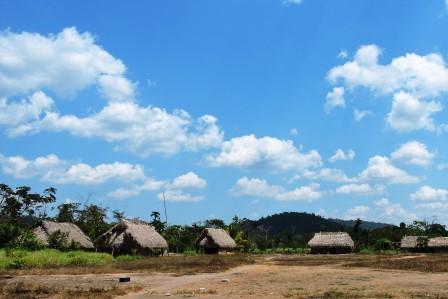
Western Pará has a history of predatory exploitation of natural resources. Its occupation occurred partly through illegal deforestation and occupation of public lands. The traditional populations, which occupy the settlements and protected areas in the region, are organized in communities ranging from thirty to two hundred families, many in remote areas, distant up to twenty hours by boat from urban centers. These populations live in poor conditions, with difficulties to guarantee their own subsistence. The average human development index (HDI) of the municipalities covered by the project is 0.585 (the national figure is 0.754).
The traditional populations, which occupy settlements, land and Conservation Units (CUs) in the region are organized in communities ranging from 30 to 200 families, many in remote areas, distant until 20h on a boat trip from urban centers, which live in situations of exclusion, risk and vulnerability, with difficulties to guarantee their own subsistence. The average human development index (HDI) of the municipalities covered by the project is 0.585 (the national figure is 0.754).
In general, a large part of the residents are beneficiaries of income distribution programs such as Bolsa Família and Bolsa Verde. Public transport, sanitation, energy and communication services are still insufficient. Most communities do not have high schools. The rural exodus mainly affects the younger segments, who end up migrating to the cities, due to lack of local opportunities for study or work. Women accumulate long hours as they work in the household, take care of the children and the elderly, and still work in the land. It is hoped that the project will contribute to transforming this situation by offering opportunities for training and income generation.
The great majority of families depend on subsistence economy, with cassava flour being their main source of income, complemented by perennial crops in the backyards, fishing, hunting and raising small animals, handicrafts, extracting rubber and oils (mainly andiroba and copaiba).
The predominant agricultural production system is still based on the practice of "cutting and burning", which is a vector of deforestation, by opening new cropping areas, and does not guarantee food security or income improvement. There are some initiatives to improve production and value added to economic activities, but agroextractivism still lacks efficient strategies that identify and potentiate productive chains and facilitate the access of products to the market.
THE PROJECT
The actions will be coordinated by CEAPS in close interaction with the representative organizations of the residents of the protected areas and settlements covered. The planned activities and investments are community-based initiatives and, for this reason, the organizations and leaderships that will be responsible for the management of each structure will be chosen by the local representatives throughout the execution of the project, and CEAPS will be responsible for offering technical advice to reduce risks in decision making.
The project is structured in five components, one of which is dedicated to management and the main components are focused on strengthening business related to sustainable value chains, community production organization and training of people in the Tapajós region.
Component 1 - Non-timber productive chains structured (38%)
This component aims to develop the productive chains of vegetable oils, meliponiculture, seeds and seedlings, to expand the scale of production, to improve the productive process and facilitate the commercialization, promoting the productive inclusion of the agroextrativists in the region.
Expected deliveries:
- A vegetable oil processing unit
- A honey processing unit, 200 Kits for meliponiculture producers and one register of producers
- Definition of five areas of seed collection
- Three units for seed storage and one commercial warehouse
- Equipment for seed laboratory
- Complex of five nurseries of seedlings
- Technical training for the producers of these productive chains
- Studies associated with productive chains
Component 2 - Active Forest Experimental Center (CEFA) increased (19%)
The Active Forest Experimental Center (CEFA) is an educational center that disseminates sustainable forest management practices, agroecology and permaculture, with an area of approximately 2,000 hectares in the Tapajós-Arapiuns RESEX, currently equipped with accommodation, spaces for educational activities for 200 people, a nursery of seedlings, a vegetable garden, a breeding unit for bees, a fish tank and several native fruit species. The center is managed by the Active Forest Intercommittee Council (CIFA), an association whithout legal personality of which CEAPS participates, composed of representatives of 14 RESEX communities.
Investments requested in this component aim to expand and diversify CEFA's demonstrative production units, so as to make it a reference space for theoretical training, and especially practice in agroecological techniques and for the generation of socio-environmental technologies that can be appropriated by the sustainable productive chains the region. In addition, CEFA is expected to expand the technical assistance and training offered by its technicians to the agroextrativists families in the area covered by the project, so as to enable the adoption of sustainable production techniques by this public.
Expected deliveries:
- New demonstration units and acquisition of equipment
- Technical assistance visits
- Training for family farmers assisted by CEFA
Component 3 - Sustainable ventures structured and expanded (12%)
This component provides for actions to expand infrastructures for community-based tourism and strengthen handicrafts from forest raw materials, as these are activities with strong synergies.
Although it has the potential to generate employment and income in the region, tourism still needs investments in infrastructure and qualification of the services offered. Therefore, professionalization and management activities will be carried out in partnership with the Tourism and Forest Handicraft Cooperative (Cooperativa de Turismo e Artesanato da Floresta – TURIARTE), which already manages two community guesthouses, implemented with the support of CEAPS, and markets the region's handicrafts.
At each tourist pole, there is a community association representing local residents who will conduct the activities and receive the infrastructures built after training their participants to self-manage the enterprise.
The Tapajós River region was identified in the Ver-o-Pará Plan of the State Tourism Secretariat as one of the regions most favorable to the development of tourism practices that include the local community and stands out for its beaches of rivers, primary forests, trails, waterfalls, lakes. The Community Based Tourism, modality that "seeks to establish a real sense of community, in which the experiences of the place and the way of life of the population are shared with the visitors," is intended for a tourist profile that seeks, besides contact with nature, the conviviality with the traditional peoples of the Amazon.
Expected deliveries:
- Two community guesthouses and six receptive poles
- Three touristic inventories and three visitation plans
- A craft house
- Community training
- Communication
Component 4 - Community management and entrepreneurship strengthened (18%)
The actions foreseen in this component are aimed at strengthening the community leaderships of the Tapajós-Arapiuns RESEX and FLONA Tapajós, mainly women and young people, in order to contribute to better management of community organizations and to increase their participation in councils, forums, working groups and networks related to the territorial management of the UCs, as well as to stimulate their articulation with the levels of government for the implementation of public policies in the region.
Expected deliveries:
- Leadership training
- Training of young entrepreneurs and support to micro-businesses
- Specific training for the female audience
Component 5 - Project management carried out (12%)
This component is divided into administrative staff (46%), administrative expenses (39%) and computers (3%) required to manage the project.
INTERVENTION LOGIC
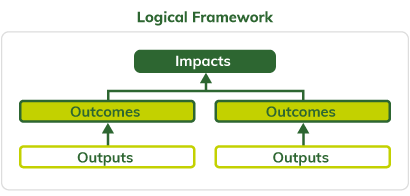
This project falls under the “sustainable production” (1) and "Science, Innovation and Economic Instruments" (4) component of the logical framework of the Amazon Fund.
Click on the following image to view its objectives tree, that is, how the project's outputs and linked to the expected outcomes and impact.