Versão em Português
Project

Preserving the Babassu Forest

Interstate Association of the Movement of Women Babassu Coconut Breakers (AMIQCB)

Código do projeto: 5697421
Project official website
Total project value
R$ 9,222,739.00
Total support amount
US$ 2,777,933.43
organization type
Third Sector
Themes
Location
Maranhão
Pará
Tocantins
Axises
Sustainable production
Contracted

Presentation

Objective

Support the operation of the Babassu Fund for the selection and support of socioenvironmental projects of agro-extractive organizations in the states of Maranhão, Tocantins and Pará, associated with actions to develop skills, provide technical support and strengthen associativism through public calls of projects approved by BNDES

Beneficiary

Traditional communities of babassu coconut breakers

Territorial scope

States of Maranhão (37 municipalities), Tocantins (16 municipalities) and Pará (6 municipalities)

Description

CONTEXTUALIZATION

The collection and cracking of the babassu coconut, which by its own form of social organization, use of territories and practices transmitted from generation to generation, characterize women who historically perform this economic activity as a "traditional community". The breakers work daily for the conservation and democratization of the access to natural resources, placing the culture of the babassu as an alternative to the practices of deforestation, burning and illegal occupation of public areas.

The Interstate Association of the Movement of Women Babassu Coconut Breakers has as its origin the union, from 1991, of these groups of women babassu coconut breakers, and was formalized as an association in 2002. The organization aims, in short, to preserve the (babassu areas) forest, generate productive income from family agro-extrativism and improve the living conditions of the families of babassu coconut breakers, as well as spread the knowledge of their rights.

The mobilization of the coconut breakers contributes directly to the recognition of the coconut breaker's way of life, to develop capacities and promote entrepreneurship among these women and to strength their organization, promoting reflection on gender issues in their communities and the building of joint solutions to their main problems.

THE PROJECT

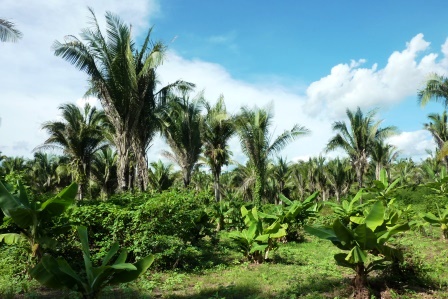
The project "Preserving the Babassu Forest" aims to contribute to the protection of native babassu forests and the improvement of the living conditions of the agro-extractivist families. The territorial scope of the project corresponds to 59 municipalities in the states of Pará, Tocantins and Maranhão. In a large part of this area, the forest environment of the babassu areas, intermingled with other agro-extractivist activities, represents the only formation with remaining native forest species.

The main component of the project is the strengthening of the Babassu Fund’s performance, created by AMIQCB in 2012. R$ 2,000,000.00 will be allocated to this fund in order to announce two public calls for the selection of socio-environmental projects of agro-extractivist communities.

In addition to the projects to be supported by the Babassu Fund, the "Preserving the Babassu Forest” project has a component that focuses on the promotion of community organization processes in the territory covered by the project. Meetings and exchanges will be held in order to foster dialogue, reflection and collective solutions building to the existing problems. With such actions, it is expected to guarantee transparency and wide participation of the target public of the project and to raise demands that can generate community initiatives to be supported by the Babassu Fund. It is also planned to design a Training Center in Socio-Environmental Projects and the realization of six classes to train a total of 150 women and young people among the target audience of AMIQCB. 

INTERVENTION LOGIC

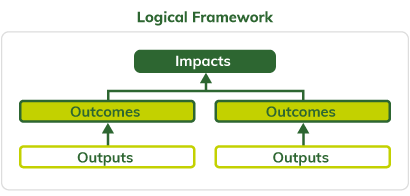
This project falls under the “Sustainable Production” (1) component of the logical framework of the Amazon Fund.

Click on the following image to view its objectives tree, that is, how the project's outputs and linked to the expected outcomes and impact.
quadrologico_EN

Evolution

Date of approval 12.27.2017
Date of the contract 04.05.2018
*Disbursement period 03.19.2026
*Deadline for disbursements
approval
12.27.2017
award
04.05.2018
conclusion

Disbursement

date amount
1º disbursements 08.29.2018 R$1,497,760.00
2º disbursements 09.19.2022 R$3,131,644.39
3º disbursements 02.06.2024 R$2,214,334.61
4º disbursements 03.22.2024 R$1,543,514.72
5º disbursements 04.10.2024 R$56,485.28
6º disbursements 03.31.2025 R$779,000.00
Total amount disbursed R$9,222,739.00

Total amount disbursed in relation to the Amazon Fund’s support

100%

ACTIVITIES CONDUCTED

The project is structured around four components, whose main activities are presented below.

Component 1 – Expansion of Financial and Technical Support for Socio-Environmental Projects through the Babaçu Fund

This component aims to expand financial and technical support for socio-environmental projects implemented by agro-extractivist organizations through the Babaçu Fund.

The 6th and 8th Calls for Proposals of the Babaçu Fund were launched to provide financial support to projects developed by community groups and organizations of babaçu coconut breakers in the states covered by the project (Maranhão, Pará, and Tocantins).

Within these states, in the areas where MIQCB operates, outreach activities were carried out to promote the calls for proposals, along with workshops designed to support organizations in the preparation of socio-environmental project proposals.

Meetings of the Babaçu Fund Management Committee (CGFB) were also supported. This independent body is responsible for the strategic planning of the Babaçu Fund and for selecting the project proposals submitted for funding.

Through these two calls for proposals, 30 projects located in 25 municipalities were selected and contracted, totaling R$ 2.4 million in funding.

Guidance materials were developed to support project management and financial reporting for the initiatives supported by the Babaçu Fund. Training events were also organized, including exchange visits with partner organizations to promote the sharing of experiences and best practices.

The multidisciplinary regional advisory teams not only supported the dissemination of the calls for proposals but also provided technical assistance to the organizations selected for funding.

Component 2 – Institutional Strengthening of MIQCB and Agro-Extractivist Communities of Babaçu Coconut Breaker Women

With support from the project, MIQCB organized governance events established in its bylaws, during which the Association’s executive leadership positions were filled, collective strategies were developed, and accountability was provided to its membership base.

Field visits were also carried out in MIQCB’s regional offices for project planning, evaluation, and monitoring activities.

Communication and transparency actions were guided by MIQCB’s Communication Plan, whose development was supported by the project. Key outputs included the production of three electronic newsletters, two radio spots, and five videos, as well as regular updates to the website and social media channels with information about the project.

Vehicles, machinery, and equipment were acquired under this component to support the work of the project team.

Independent external audits of MIQCB were also conducted, resulting in unqualified audit reports.

Component 3 – Capacity Building in Socio-Environmental Projects Related to Babaçu Agro-Extractivism

The project enabled the establishment of the Babaçu Coconut Breakers Training Center through the development, implementation, and continuous revision of the pedagogical plan for the course entitled “Sharing Knowledge, Developing Projects and Preserving the Babaçu Forest”, as well as through the acquisition of furniture and educational support materials.

The course offered by the Training Center was designed as an extension program and developed in partnership with the Federal Institute of Education, Science and Technology of Maranhão (IFMA), with the support of volunteer professors and teaching assistants.

Four cohorts were organized, targeting women and young people from MIQCB’s regional organizations. In total, 98 students completed the course, which included 300 hours of classroom instruction, exchange visits, and educational activities in traditional communities.

Additional training events aimed at MIQCB’s target audience were also carried out under this component.

With support from the project, MIQCB continued to strengthen partnerships with educational institutions, including cooperation with the State University of Maranhão (UEMA), and developed the Sustainability and Fundraising Plan for the Babaçu Coconut Breakers Training Center.

Component 4 – Project Management

In addition to routine project management activities, two documents were prepared in draft form: the Outcome Evaluation Report and the Social Balance Report.




Final Evaluation

Collection

In this area we offer some PDF files with the main publications generated by the project. Click the filename to start the download.