Versão em Português
Project

Adding Value to Amazon Socioproductive Chains

Life Center Institute (ICV)

Código do projeto: 5928469
Project official website
Total project value
R$ 16,405,000.00
Total support amount
US$ 4,999,847.61
organization type
Third Sector
Themes
Settlement
Location
Mato Grosso
Axises
Sustainable production
Concluded

Presentation

Objective

To support the strengthening of sustainable productive arrangements in the Amazon

Beneficiary

Family farmers and agrarian reform settlers, as well as their community and cooperative associations

Territorial scope

Communities in four municipalities in the North and Northwest of Mato Grosso

Description

CONTEXTUALIZATION

The project aimed to implement sustainable practices in six Amazon sociobiodiversity value chains in municipalities of Mato Grosso.

With the objective of creating solutions capable of transforming the current pattern of land occupation - reducing deforestation and social exclusion - the project sought to build innovative productive arrangements together with family farmers in these regions. In this sense, it worked across two types of value chains: extractive chains (babassu and Brazil nut) and agricultural/livestock chains (milk, fruits and vegetables, cocoa, and coffee).

As part of a broader rural and community development initiative, the project encompassed various links of the six productive chains, addressing key bottlenecks to consolidate a sustainable‑based economy. By increasing productivity in already anthropized areas and improving household income, the project helped reduce pressure on standing forest.

THE PROJECT

The project aimed to implement sustainable practices in six Amazon sociobiodiversity value chains in municipalities of Mato Grosso.

With the objective of creating solutions capable of transforming the current pattern of land occupation - reducing deforestation and social exclusion - the project sought to build innovative productive arrangements together with family farmers in these regions. In this regard, it worked across two types of value chains: extractive chains (babassu and Brazil nut) and agricultural/livestock chains (milk, fruits and vegetables, cocoa, and coffee).

As part of a broader rural and community development initiative, the project encompassed several links within the six productive chains, addressing key bottlenecks to establish a sustainable‑based economy. By increasing productivity in already anthropized areas and improving household income, the project helped reduce pressure on standing forest.

INTERVENTION LOGIC 

The project was aligned with the “Sustainable Production” (1) component of the Amazon Fund Logical Framework.

The direct effects expected from the project in the northern and northwestern regions of Mato Grosso were: (i) the strengthening of activities related to the sustainable use of forests and their biodiversity; (ii) the addition of value within agroforestry product value chains; (iii) the expansion of managerial and technical capacities for the implementation of agroforestry systems, agro‑extractive production, and the processing of agroforestry products; and
(iv) the restoration of deforested and degraded areas and their use for economic purposes and environmental conservation.

Click on the following image to view its objectives tree, that is, how the project's outputs and linked to the expected outcomes and impact.
quadrologico_EN


Evolution

Date of approval 12.11.2017
Date of the contract 01.30.2018
Date of conclusion 08.25.2023
*Disbursement period 07.29.2022
*Deadline for disbursements
approval
12.11.2017
award
01.30.2018
conclusion
08.25.2023

Disbursement

date amount
1º disbursements 03.19.2018 R$1,948,200.00
2º disbursements 10.26.2018 R$3,989,841.00
3º disbursements 12.23.2019 R$5,500,000.00
4º disbursements 03.11.2021 R$4,515,959.00
5º disbursements 07.28.2021 R$47,000.00
6º disbursements 05.25.2022 R$404,000.00
Total amount disbursed R$16,405,000.00

Total amount disbursed in relation to the Amazon Fund’s support

100%

ACTIVITIES CONDUCTED 

The project was structured into seven components: (i) organization and associativism; (ii) agroecological production; (iii) processing; (iv) commercialization; (v) communication and dissemination of results; (vi) project management; and (vii) cross‑cutting activities.

Approximately twenty local organizations were strengthened, and nearly six hundred families were supported through transformative actions that ranged from the restructuring of community initiatives to the generation of collective and household income, including the expansion and improvement of production systems. A network of partners was established, and significant progress was achieved in local supply chains and in raising awareness among farming families about producing without deforestation and without the use of pesticides.

The implementation of good production practices, integrating productive and environmental actions, enabled family farmers to effectively participate in local markets, gaining greater visibility in the region. Moreover, the project addressed one of the main challenges faced by rural producers: the commercialization of their products.

Through investments and technical assistance in agroecological production technologies on rural properties, solutions such as greenhouses, biodigesters, and rotational grazing systems were implemented and made visible.

Credit agents were mobilized to better understand the realities of farming families through meetings and field visits, which resulted in the preparation and approval of 17 projects through the Cooperative Credit System (Sicredi), totaling approximately R$ 737,000. These resources supported the acquisition of irrigation systems for vegetables and fruit crops, dairy cattle, vehicles, and the implementation of solar energy systems on properties. In addition, 30 additional credit projects were approved using economic feasibility studies provided by ICV.

A key achievement was the establishment of the Organic Production Network of the Mato Grosso Amazon (REPOAMA), which operates under the Participatory Guarantee System (SPG) for organic certification recognized by the Ministry of Agriculture and Livestock (MAPA). This is the first SPG for non‑Indigenous family farming in Mato Grosso. This certification model allows the farmers themselves to conduct peer visits and inspections of all participating properties to verify compliance with organic regulations. Building this network involved various training efforts and meetings among community organizations, covering 13 organizations and more than 100 families participating in the project.

The Rota Local (“Local Route”) was created as a commercialization mechanism in response to farmers’ need to diversify sales channels. Its proposal is to strengthen the presence of family farming products in regional markets by coordinating suppliers and final buyers. Support includes market prospecting and negotiation, logistics assistance, and advisory services for document regularization and management processes to enable invoice issuance and centralized payment flows. Over its first three years, the Rota Local commercialized more than R$ 1.89 million in products. Of this amount, 49.14% was sold to retail markets, 24.83% to wholesale markets, 13.31% to institutional markets, and 10.31% to final consumers (both individuals and companies). The best‑selling products were fruits (42%), followed by dairy products (24%), legumes (15%), and vegetables (14%).

Regarding organization and associativism, the project strengthened the role of each group within the value chains, supporting collective procurement of inputs, access to new projects and markets, and production organization. Training was offered for leaders and representatives on administrative and accounting management of organizations, economic feasibility of community enterprises, development and management of small projects, resource mobilization, and business modeling for community initiatives. Actions were also carried out to regularize associations and cooperatives, enabling their formalization and issuance of invoices.

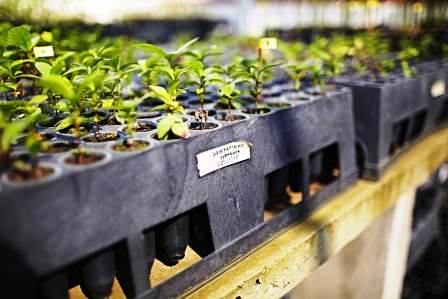
In the agroecological production component, inputs were acquired to support organic conversion and on‑farm restoration, in addition to the implementation of REPOAMA. Agroecological production units were implemented for fruit and vegetable crops, coffee, and cocoa; rotational grazing units were established for the dairy chain; and degraded areas were restored (for ecological or economic purposes), with the necessary inputs supplied. Training sessions, exchange visits, and field activities were also carried out.

In the processing component, the project supported the addition of value to products by improving physical facilities and licensing, standardizing operations, and adopting appropriate packaging and labeling with all required information. Training was also provided to prepare participants to work in agro‑processing units and community kitchens.

In the commercialization component, continuous advisory support was provided to family farmers and community organizations to facilitate access to government markets, such as the Food Acquisition Program (PAA) and the National School Feeding Program (PNAE), as well as more robust private markets, including industries and local and regional retailers and wholesalers. Technical training was conducted not only with community organizations but also with nutritionists, managers, and technicians from municipal agriculture and education departments. The project supported market research, studies on emerging consumption patterns, and client prospecting, identifying and assisting potential productive and commercial arrangements, as well as supporting their governance and monitoring.

In the communication and dissemination component, the project worked on marketing strategies for local, sustainable, and organic production, assisting groups in developing commercial and branding strategies, in addition to promoting project activities and results.


 

Final Evaluation

Result and impact indicators

The products and services directly address the main development stages of the value chains: sustainable production, processing and commercialization with increased added value, strengthening the managerial capacities of community organizations, and forest and degraded‑area restoration.

The results of the main indicators agreed upon for monitoring the expected direct effects are presented below.

Direct Effect 1.1: Economic activities for the sustainable use of the forest and biodiversity identified and developed.


  • Annual revenue from the economic activity for sustainable use – fresh products (outcome indicator)
    Baseline: BRL 1,157,680.00 | Target: BRL 2,315,360.00 | Result achieved: BRL 2,870,785.30
  • Annual revenue from the economic activity for sustainable use – benefited products and services (outcome indicator)
    Baseline: BRL 2,425,058.14 | Target: BRL 3,395,081.40 | Result achieved: BRL 5,587,520.30

Direct Effect 1.3:  Expanded managerial and technical capabilities for the implementation of agroforestry systems, agroextractive production, and good agricultural practices

  • Number of individuals trained to practice and manage sustainable economic activities who effectively apply the knowledge acquired (output indicator)
    Target: 700 | Result achieved: 497

Given the difficulties in measuring this indicator, information provided by the associations was used, considering the people active in the organizations who participated in the actions, decisions, and activities.

  • Number of third sector organizations that advanced management and governance
    Target: 20 | Final result: 15

Progress was observed in terms of management and governance in most of the supported organizations. However, management changes and internal conflicts in some of them meant that the result of this indicator fell short of the stipulated target, which considered all the organizations covered by it.

Direct Effect (1.4) – Deforested and degraded areas recovered and used for economic purposes and ecological conservation

  • Directly managed forest area (hectares)
    Baseline: 68,000 | Target: 300,000 | Final result: 207,160

The indicator referring to the area of forest directly managed is related to the Brazil nut value chain and fell below expectations due to changes in the management of one of the associations, which affected concession agreements with forest management farms. 

  • Recovered area in use for economic purposes (hectares)
    Target: 30 | Final result: 74.75
  • Area recovered for environmental conservation and/or environmental regularization purposes – regeneration underway (hectares)
    Target: 100 | Final result: 184.2

Institutional and administrative aspects

During project implementation, several strategic partnerships were established, including with Conexsus for training and the implementation of organizational development methodologies and business modeling, as well as support for market mapping and consulting on commercialization indicators. Partnerships were also established with the Institute for Conservation and Sustainable Development of the Amazon (Idesam) to support community organizations’ participation in impact‑enterprise acceleration programs; with MAPA for registering REPOAMA as a Participatory Conformity Assessment Body; and with the State Secretariat for Family Agriculture (SEAF) in the implementation of public policies for family farming, such as institutional purchasing programs, reactivation of municipal councils, and tax discussions related to family agriculture.

Additionally, the partnership with the Federal Institute of Mato Grosso (IFMT) contributed to technical training, the development of the pedagogical plan, and the offering of mandatory foundational courses. The project’s research support also involved the Family Farming Resilience Research Program, with participation in research groups and assistance for field studies, as well as a partnership with the University of Florida (MDP/UF) through the Master Development Program, supporting scholarship holders conducting applied research within the project.

Risks and lessons learned

Some risks and lessons identified at the end of the project include:

  • Families who work collectively and are guided by a shared purpose are able to benefit more effectively from the project;
  • The commitment of families to the project influences the results, reinforcing the importance of understanding each family’s specific context;
  • Demonstrating practical actions accelerates learning processes and helps achieve project objectives;
  • Maintaining good communication among all stakeholders, partners and farming families, is essential, since community organizations are more vulnerable to changes in family and community relationships. Their development is not linear; it is more cyclical than spiral‑shaped, which creates the risk of collapse and the need to restart from scratch;
  • The territory where Redes operates is an area of recent immigrant settlement, with families coming from different regions of Brazil. It is necessary to create incentives across all stages of the value chain so families can develop a sense of identity with the territory;
  • Strategies such as training, exchange visits, and the provision of inputs and equipment are important for ensuring farming families remain engaged throughout the process and that the project achieves good results at the local level. However, the most important aspect is helping families develop their own conditions for self‑sufficiency and sustainability.

Sustainability of results

The project addressed, throughout its implementation, four key issues identified at its outset: the lack of productive arrangements based on deforestation‑free production; the low utilization of the region’s productive potential, with a high dependence on imported products for local supply; the fragility of grassroots organizations, combined with limited knowledge and practices among technicians and farmers regarding agroecological principles; and
the ineffective implementation of structuring public policies, such as technical assistance and financing.

Aiming to create sustainable solutions that could generate economic and social appeal within six productive chains (babassu, Brazil nut, milk, fruits and vegetables, cocoa, and coffee), the project invested in specific actions at different stages (production, processing, commercialization, and management). It also strengthened community organization and associativism among the target populations, contributing to income generation, food security, and reduced pressure on natural resources.

Considering the number of individuals trained in the practice and management of sustainable economic activities who are effectively applying the knowledge acquired, as well as the number of farmers who are currently making their own investments in these technologies and applying the model proposed by the project, it is evident that these actions have become consolidated.

ICV has been seeking new projects and funding partners to support subsequent actions that have emerged and become necessary for ensuring the sustainability of the results achieved so far.


Collection

In this area we offer some PDF files with the main publications generated by the project. Click the filename to start the download.