The project seeks to strengthen the institutional and operational capacity of the Military Fire Department of the State of Rondônia (CBMRO) and enhance its ability to prevent, monitor and combat forest fires and unauthorized burning. The supported actions include institutional strengthening, infrastructure modernization, and the implementation of prevention, training and monitoring activities.
The project is structured into two components, whose main activities are presented below.
Component 1 – Institutional Strengthening
This component aims to strengthen the operational capacity of the Military Fire Department of the State of Rondônia (CBMRO) through the reinforcement of the Mobile Forest Fire Prevention and Suppression Brigades (BPCIFM) and the training of military personnel to prevent and combat forest fires and unauthorized burning.
The acquisition and delivery of seven Forest Fire Engine Tankers (ABTFs) for the existing mobile brigades were completed. In addition, 664 sets of Personal Protective Equipment (PPE) were procured to support forest firefighting operations.
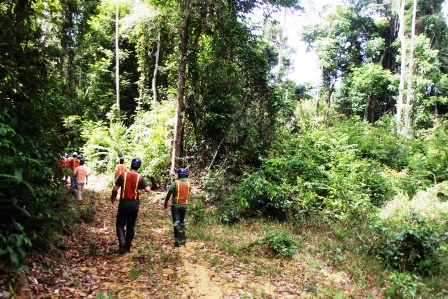
Three training courses focused on forest firefighting were carried out, training 94 military personnel, including nine women. Six additional training courses were also conducted, exceeding the number initially planned under the project.
Component 2 – Prevention, Suppression, Monitoring and Enforcement
This component aims to strengthen actions related to the prevention, suppression, monitoring and enforcement of forest fires and unauthorized burning through the training of volunteers, the implementation of environmental awareness campaigns and the decentralization of heat-source monitoring activities.
Training courses on forest firefighting techniques and integrated fire management were delivered, training 927 civilian volunteers, including 323 women, across 49 municipalities in Rondônia, surpassing the original target established for the project.
In-person environmental education activities focused on forest fire prevention were carried out in municipalities throughout Rondônia. These activities mobilized military personnel who worked directly with local communities and were complemented by public service announcements broadcast on radio stations and awareness campaigns conducted through social media channels.
Seven drones equipped with thermal cameras were acquired to support heat-source monitoring activities. Training courses related to the operation of these devices were also conducted. In addition, the acquisition of laptops and uninterruptible power supply (UPS) equipment was completed, strengthening the infrastructure available for monitoring activities.