The project is structured around the following components, outputs and services:
Component 1 – Fundo Dema Call for Proposals
This component will enable organizations representing traditional peoples and communities to access financial resources and technical support for the implementation of community-based projects. Planned activities include: (i) a public call for proposals; (ii) strengthening community organizations; and (iii) implementation and monitoring of projects supported through the call.
Component 2 – Collective Territorial Planning
This component strategically coordinates all project initiatives through territorial planning processes led by a multi-stakeholder governance body in priority intervention areas. This approach aims to avoid the dispersion of efforts and maximize the impact of project activities, which will be systematically monitored, evaluated and communicated. Planned activities include: (i) participation, monitoring and evaluation; (ii) implementation of collective strategic plans for agroecological territories; and (iii) communication and educational materials.
Component 3 – Land Tenure Governance and Collective Rights
This component seeks to contribute to the advancement of public land allocation policies by supporting land tenure regularization and territorial governance processes in areas eligible for collective land titling. The component will support two initiatives: the Lago Grande Agro-Extractive Settlement Project (PAE Lago Grande), in Santarém, Pará, and the recognition and protection of cumbaru nut trees and traditional collective-use and harvesting practices in the communities of Cachoeirinha, Buriti do Atalho, Buriti Grande, Chico Leite and Carrapatinho, in Nossa Senhora do Livramento, Mato Grosso. Planned activities include: (i) community strengthening and capacity building on land tenure issues; and (ii) legal opinions and technical legal support.
Component 4 – Socio-productive Organization, Agro-extractivism and Environmental Conservation
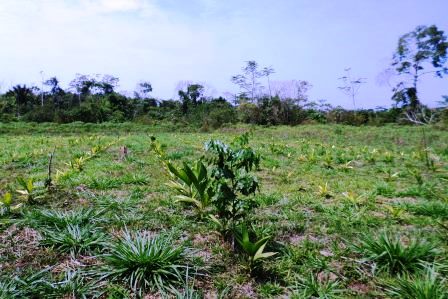
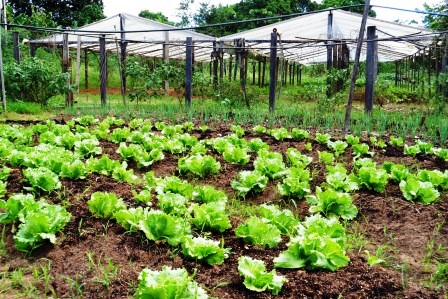
This component aims to reduce community vulnerability and increase resilience to droughts, forest fires, deforestation and climate change impacts, while mitigating biodiversity loss, genetic erosion, water scarcity and food insecurity. Planned activities include: (i) training programs, climate justice calendars and agroecological record books; (ii) implementation, maintenance and enrichment of agroecological systems and traditional agricultural systems; and (iii) protection and conservation of seeds, water resources and forests.
Component 5 – Food Supply Systems and Socially Constructed Markets
This component seeks to strengthen food supply systems based on agro-extractive products through the establishment of agroecological marketing routes and expanded access to institutional markets. The expected outcomes include increased economic autonomy, particularly for women, stronger relationships between producers and consumers, and improved access to healthy food for communities, urban low-income neighborhoods and schools. Planned activities include: (i) establishment of marketing routes; (ii) expanded access to institutional markets; and (iii) value addition and promotion of local food cultures.
Expected Results
-
Local organizations representing traditional peoples and communities gain access to financial resources and technical support for the management and implementation of small-scale community projects.
-
Progress in public land allocation policies, particularly in territories eligible for collective land titling.
-
Communities become less vulnerable and more resilient to the impacts of climate change, with reduced biodiversity loss, genetic erosion, water scarcity and food insecurity.
-
Strengthening of agro-extractive food supply systems, resulting in increased economic autonomy, especially for women, stronger producer-consumer relationships, and continuous access to healthy food for communities, urban neighborhoods and schools.
INTERVENTION LOGIC
The project falls under Components 1. Sustainable Production and 3. Land Use Planning of the Amazon Fund Logical Framework, contributing to the following direct effects: (i) identification and development of sustainable forest- and biodiversity-based economic activities (1.1); (ii) increased value added in agroforestry and biodiversity product value chains (1.2); (iii) strengthened managerial and technical capacities for the implementation of sustainable forest- and biodiversity-based economic activities (1.3); (iv) restoration of deforested and degraded areas for economic use and ecological conservation (1.4); and (v) protected areas with strengthened infrastructure, territorial protection and consolidated management (3.2).